

PolyPhase™
Advanced Polymer Lifecycle Technology
Designed to perform during use. Engineered with end-of-life in mind.
PolyPhase™ is a low-dose functional masterbatch being evaluated for conventional polyethylene (PE) and polypropylene (PP) applications. It is blended into an existing polymer formulation with the aim of maintaining required product performance during use and subsequently promoting controlled polymer-chain breakdown under suitable environmental conditions.
PolyPhase™ at a Glance
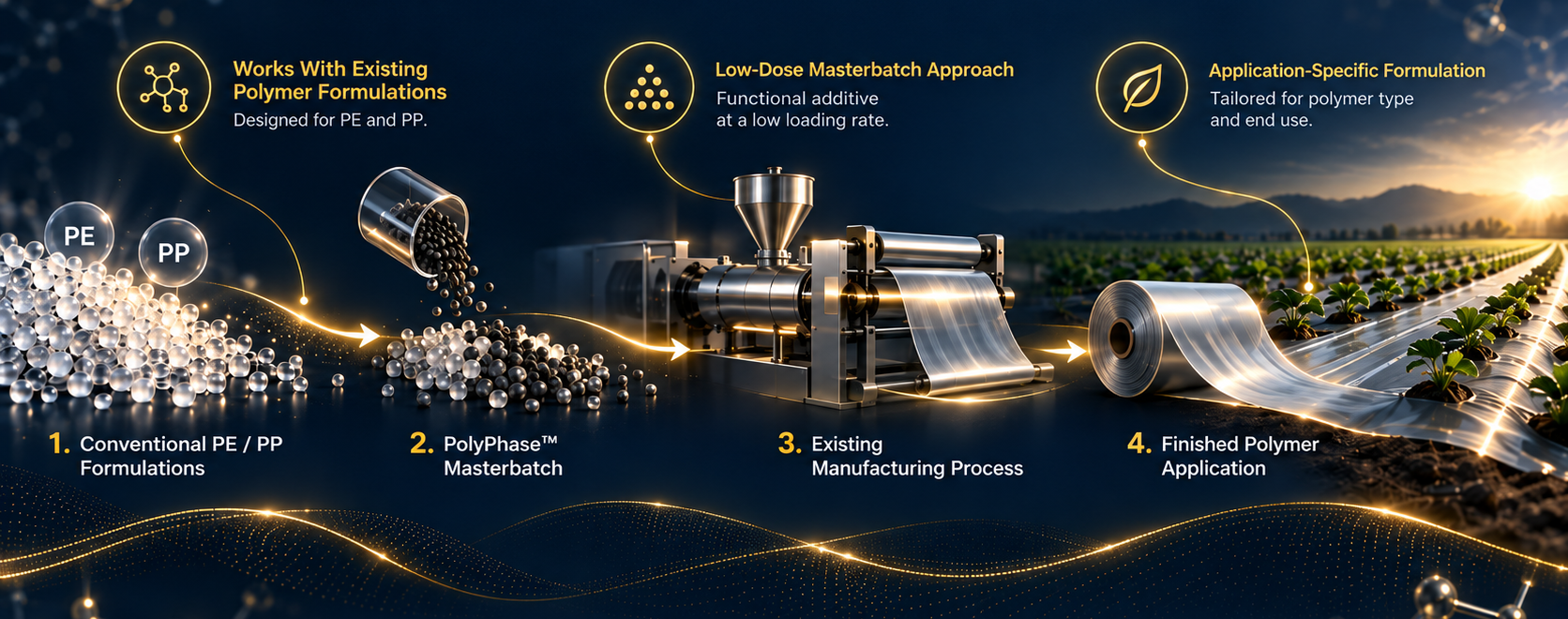
PolyPhase™ is a functional masterbatch being evaluated for conventional PE and PP applications. It is designed to be added to an existing polymer formulation and assessed through production trials before wider commercial use.
01 - POLYMERS
PE & PP
Designed for conventional polyethylene and polypropylene applications.
02 - FORMAT
Functional Masterbatch
Added to the manufacturer’s existing polymer formulation.
03 - ADDITION RATE
Around 1%
Typical starting point, subject to formulation, product design and application requirements.
04 - MANUFACTURING
Existing Processes
Intended to be evaluated within existing extrusion and converting processes.
05 - SERVICE LIFE
Application-Specific
Formulation can be adjusted around polymer type, product thickness, required service life and local conditions.
06 - VALIDATION
Trial Before Scale-Up
Production compatibility and finished-product performance are validated before wider commercial supply.
How PolyPhase Works
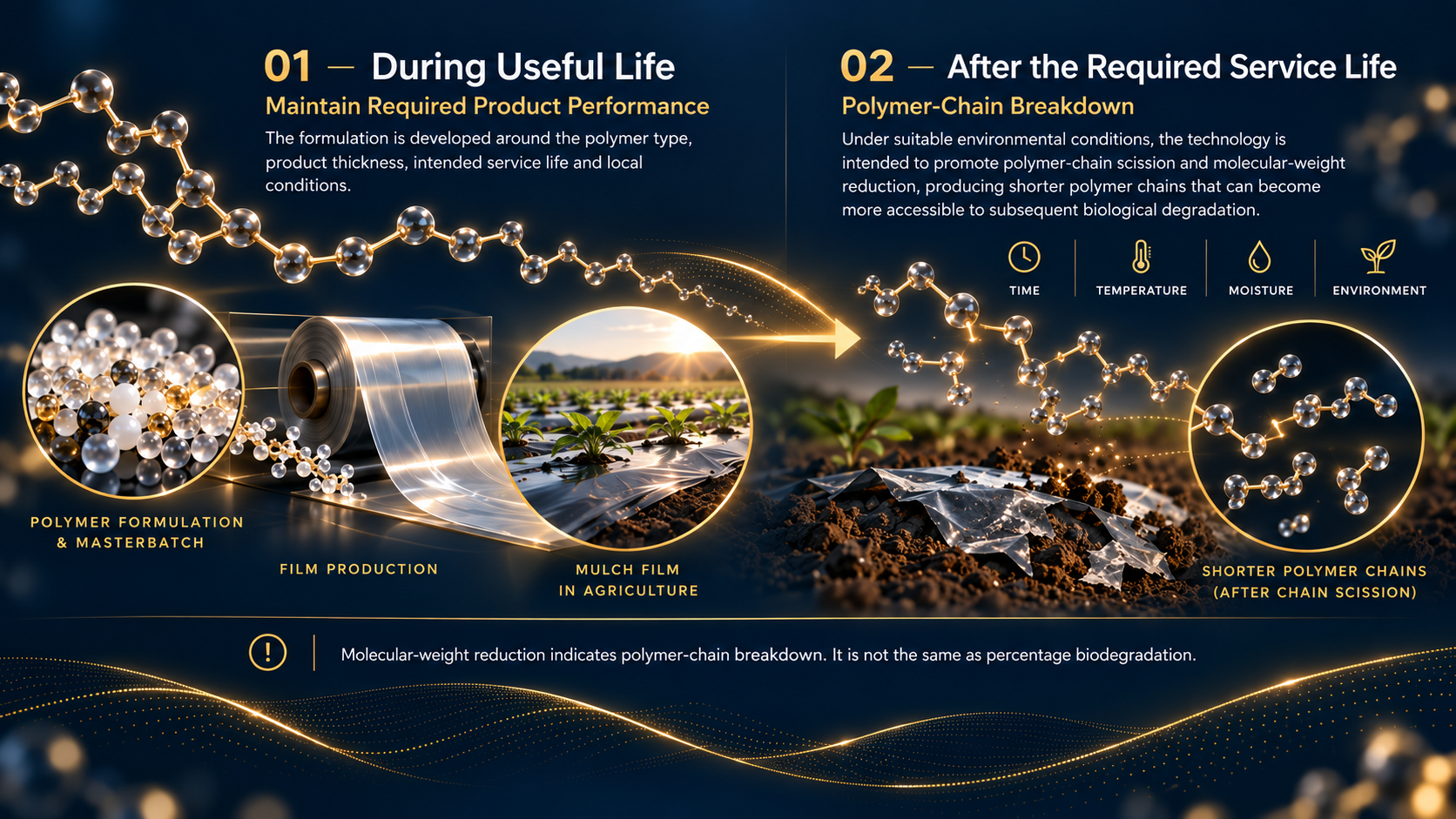
PolyPhase is designed around two stages. During the required service life, the formulation is intended to maintain the product performance needed for its application. After that service period, suitable environmental conditions can promote polymer-chain breakdown and molecular-weight reduction.
Featured Application — PolyPhase™ AM
Agricultural & Horticultural Mulch Film Masterbatch
PolyPhase™ AM is being evaluated for agricultural and horticultural mulch films. It is intended to be incorporated into an existing manufacturer’s PE formulation, with the formulation adjusted around factors such as film thickness, crop cycle, local climate and required service life.
The development approach is to work with established film manufacturers on formulation, production trials and local field evaluation before considering wider commercial supply.
POLYMER
PE mulch-film formulations
FILM DESIGN
Thickness and mechanical requirements
FIELD CONDITIONS
Climate, crop and local environment
SERVICE LIFE
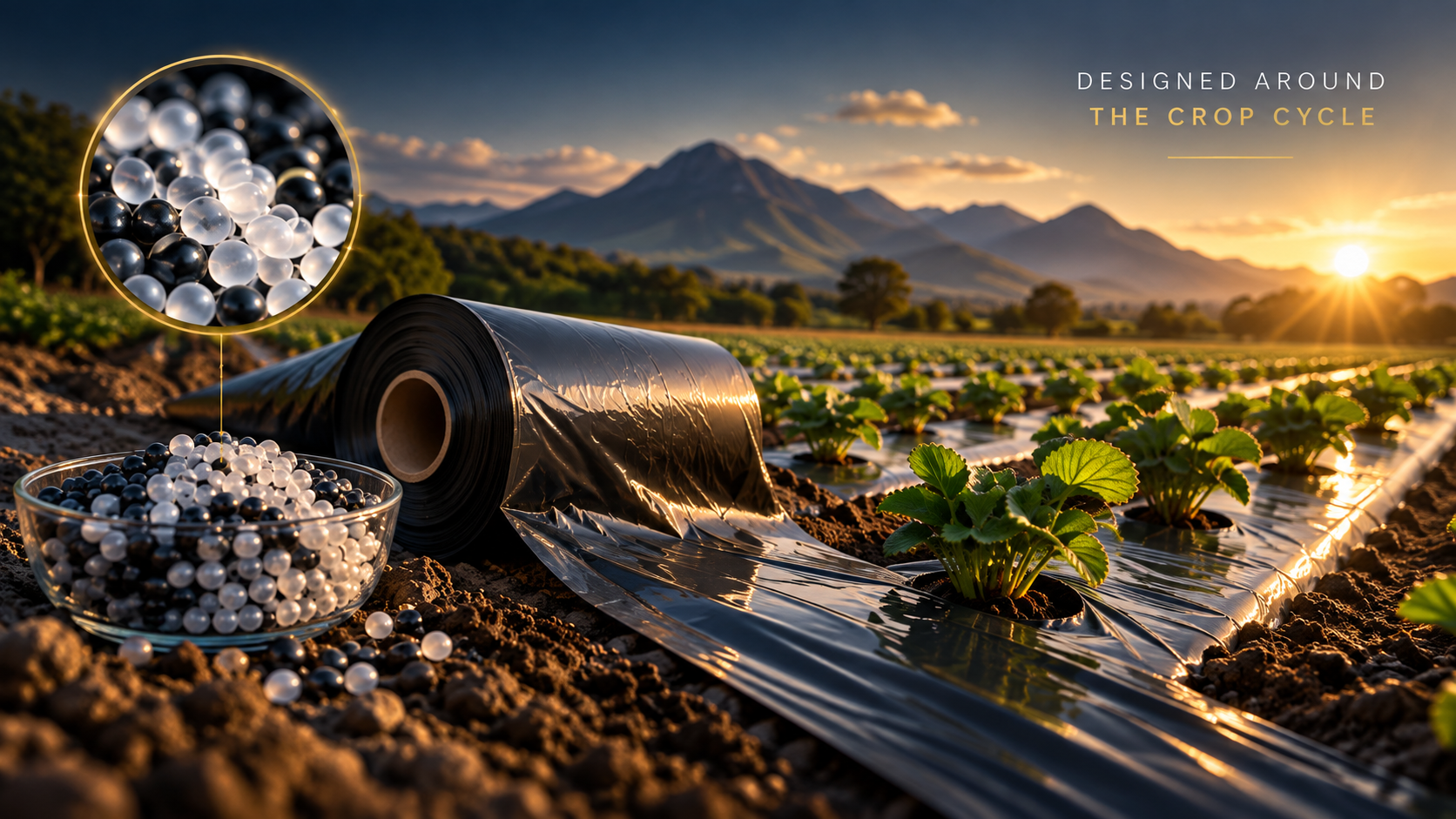
Defined around the intended crop cycle
Technical Evidence So Far
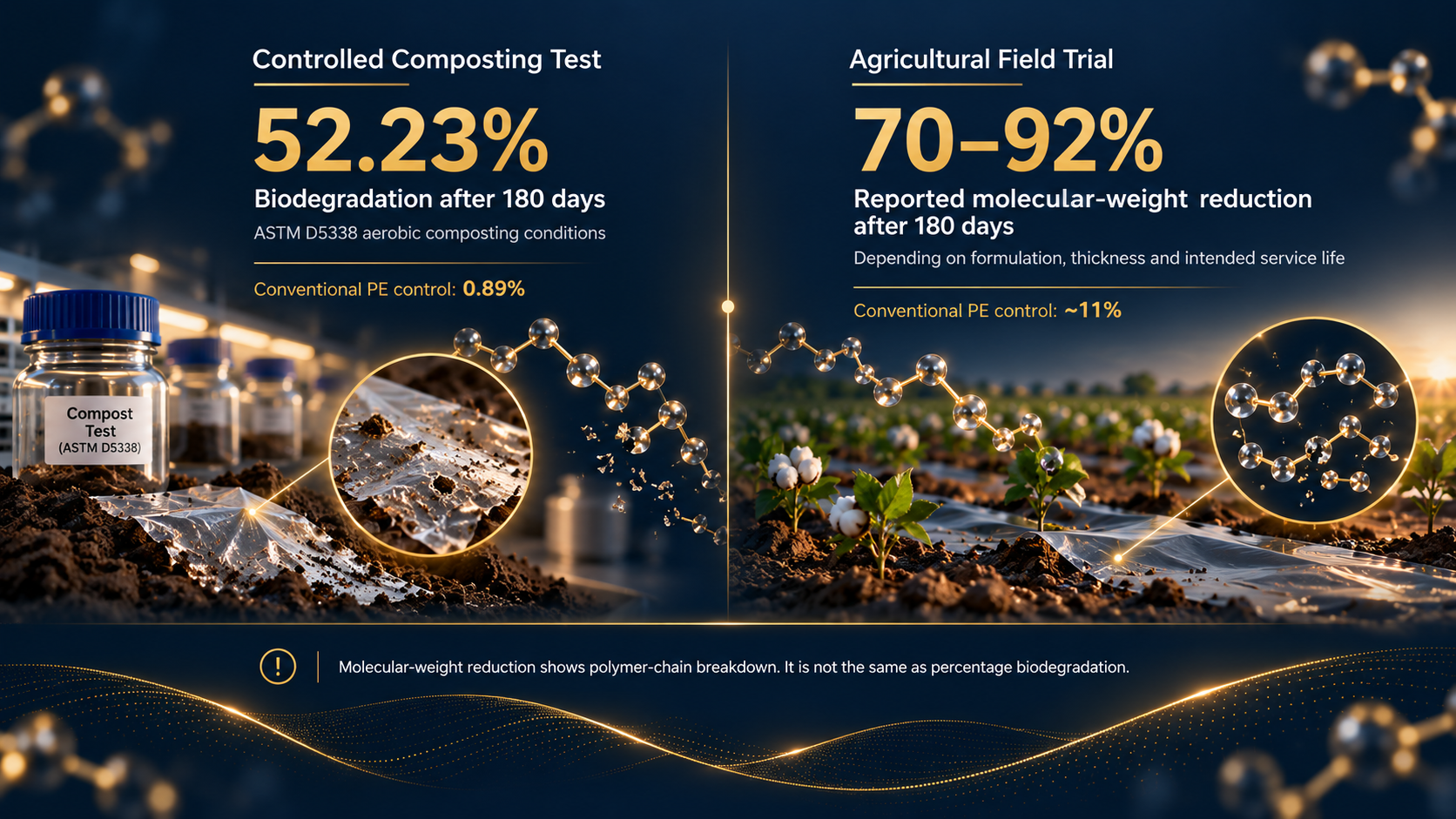
The underlying technology has been assessed through third-party laboratory testing and agricultural field trials. Results available so far include measurable biodegradation under controlled test conditions and substantial polymer-chain breakdown in selected field evaluations.
Results are specific to the formulation tested, test method and environmental conditions and should not be interpreted as a universal degradation rate.
Questions Manufacturers Usually Ask
PolyPhase is being evaluated as an application-specific masterbatch rather than a one-size-fits-all product. The questions below cover the main points manufacturers usually want to understand before considering a production trial.
-
PolyPhase is currently being evaluated for conventional polyethylene (PE) and polypropylene (PP) applications. Suitability depends on the resin, formulation, manufacturing process and finished-product requirements.
-
A typical starting formulation may use around 1% masterbatch. The final addition rate depends on the polymer, product design, required service life and intended application.
-
PolyPhase is intended to be evaluated within existing PE and PP processing systems. The manufacturer’s normal extrusion or converting process can be used as the starting point, with processing compatibility confirmed during a production trial.
-
This needs to be confirmed for each application. Relevant properties such as tensile strength, elongation, tear resistance, puncture performance, sealing and other product-specific requirements should be checked during the trial before commercial use.
-
The formulation can be developed around factors such as polymer type, product thickness, required service life, climate and local environmental conditions. There is no single degradation timeline that applies to every product or location.
-
Under suitable environmental conditions, the technology is intended to promote polymer-chain scission and molecular-weight reduction. This produces shorter polymer chains that can become more accessible to subsequent biological degradation.
Molecular-weight reduction is not the same as percentage biodegradation.
-
No. PolyPhase is being developed as a functional masterbatch for conventional PE and PP. The existing polyolefin remains the main material rather than being replaced by a completely different biodegradable resin system.
-
Yes. The underlying technology has undergone third-party laboratory testing and agricultural field evaluation. Results available so far include measurable biodegradation under defined laboratory conditions and substantial molecular-weight reduction in selected field trials.
Results are specific to the formulation tested, test method and environmental conditions.
-
Testing has been carried out on selected samples, but PolyPhase is not currently being marketed with a universal “zero microplastics” claim. Any such claim for a finished product should be supported by testing appropriate to the specific formulation and intended environment.
-
No. Regulatory classification, testing and certification requirements can vary by country and application. These requirements should be reviewed as part of the local evaluation process before commercial deployment.
-
Yes. The intended approach is to begin with a manufacturer evaluation and production trial. Finished-product performance can then be assessed before moving to local field validation or wider commercial supply.
-
Helpful starting information includes the polymer type and grade, current product formulation, manufacturing process, product thickness or weight, required service life, mechanical-performance requirements, intended end use and target market.
For agricultural applications, crop type, local climate and expected field life are also useful.
What Should the Commercial Comparison Include?
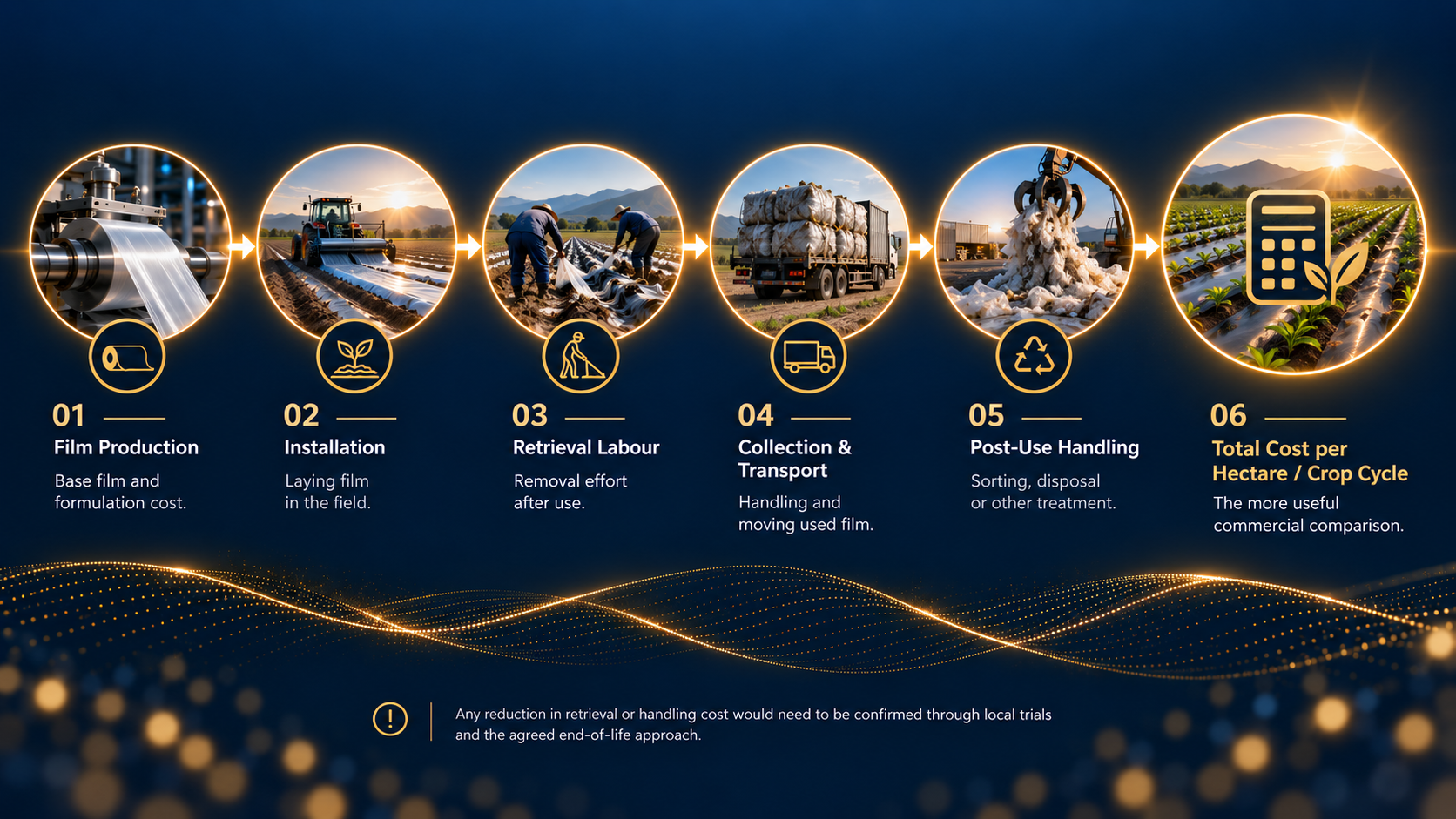
For agricultural mulch film, the relevant comparison may extend beyond the price of the masterbatch or film itself. Material use, installation, retrieval labour, collection, transport and post-use handling can all contribute to the total cost of each crop cycle.
The aim is to compare the total cost per hectare and crop cycle using the manufacturer’s and grower’s actual operating data.
Where PolyPhase AM Stands Today
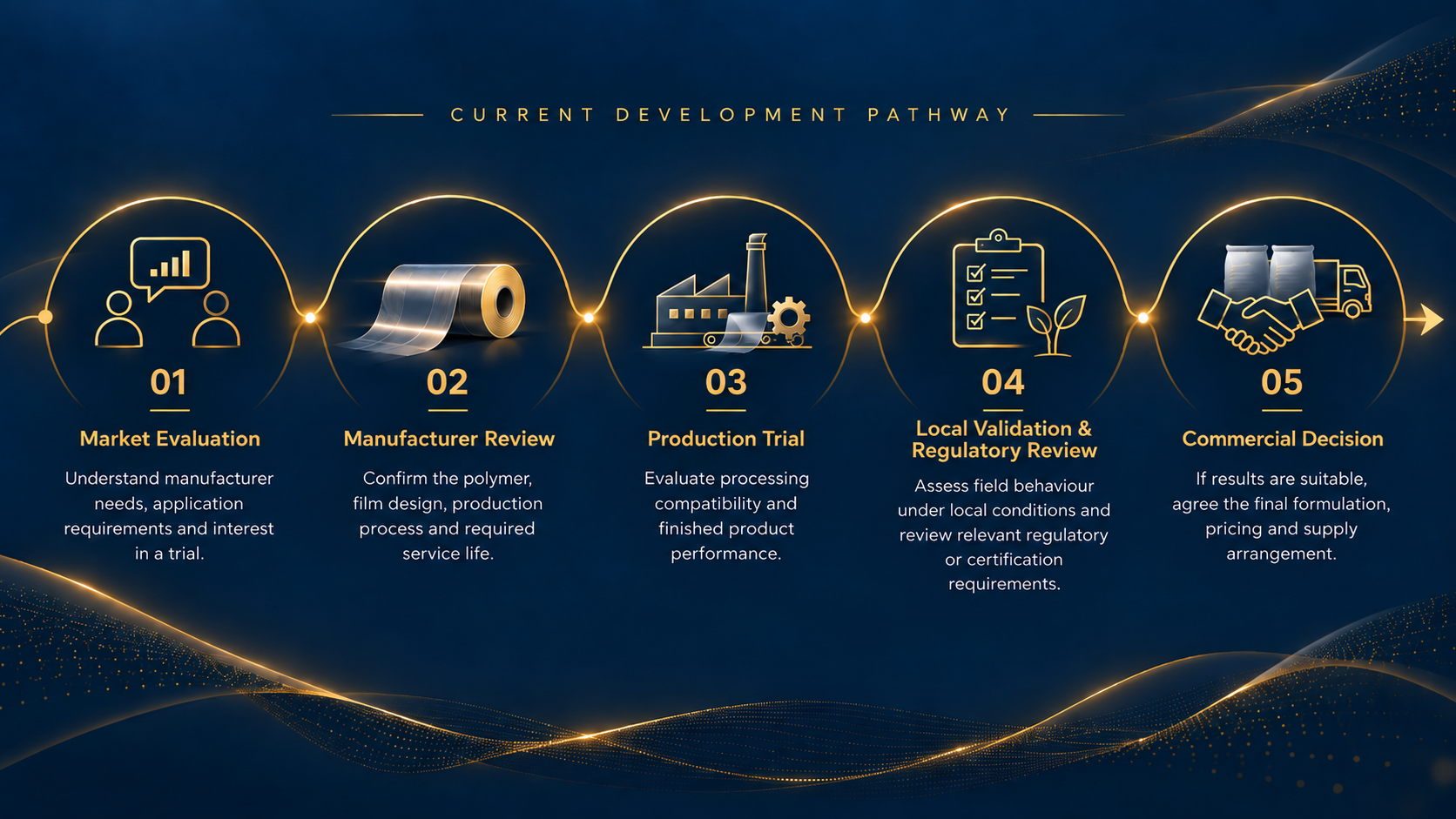
PolyPhase™ AM is currently in market evaluation for agricultural and horticultural mulch-film applications. Solus Prime is beginning discussions with film manufacturers and industry participants to understand application requirements, technical interest and potential trial opportunities.
Where there is suitable interest, the next stage is to work with selected manufacturing partners on formulation and production trials, followed by local field validation and any relevant regulatory or certification review before wider commercial supply.
Other PolyPhase Applications
PolyPhase is not limited to agricultural mulch film. The underlying technology has also been evaluated across selected PE and PP product formats. Each application requires its own formulation, manufacturing trial and performance assessment.
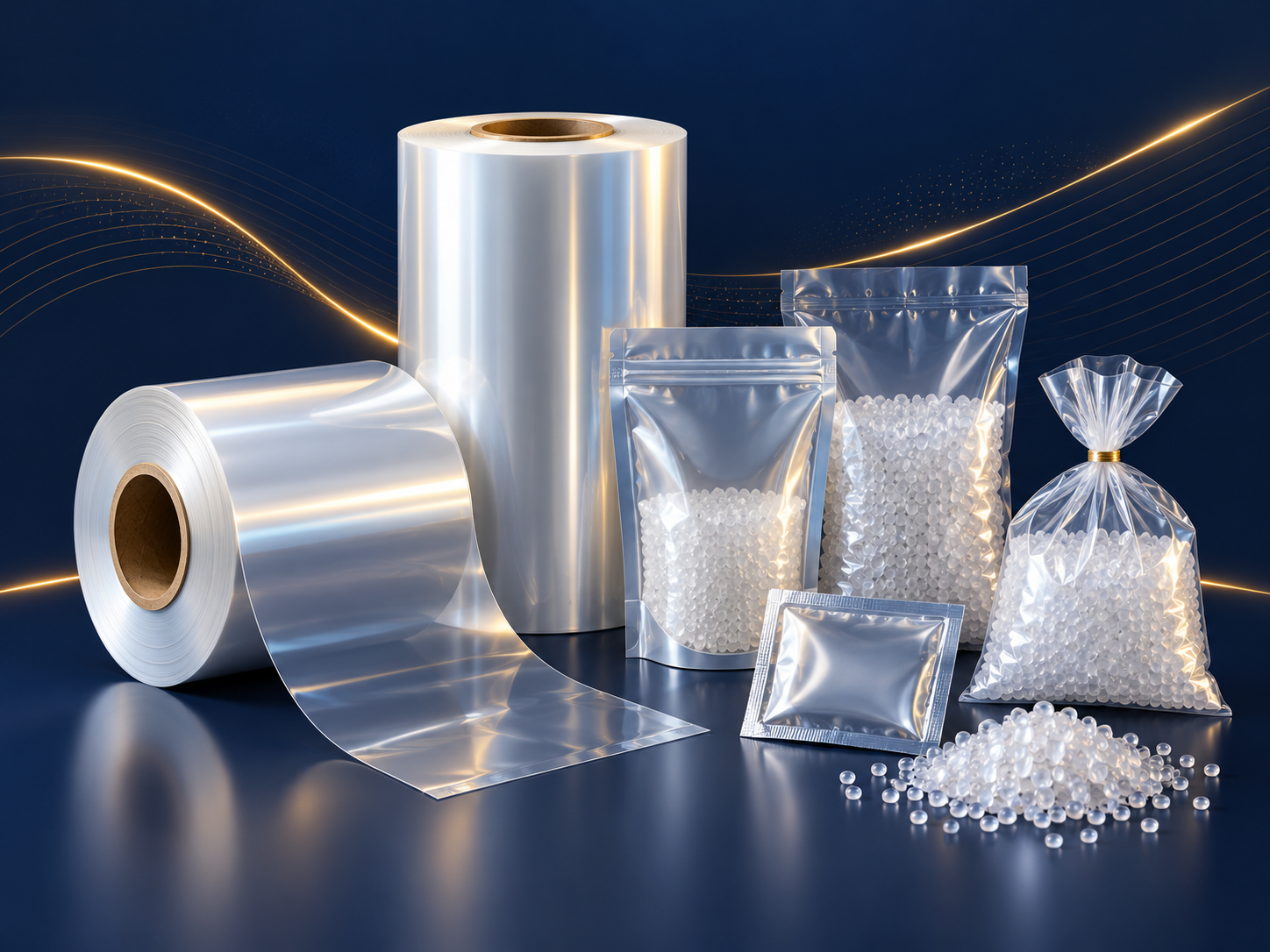
Flexible Films & Bags
Selected PE films, bags and flexible packaging formats.
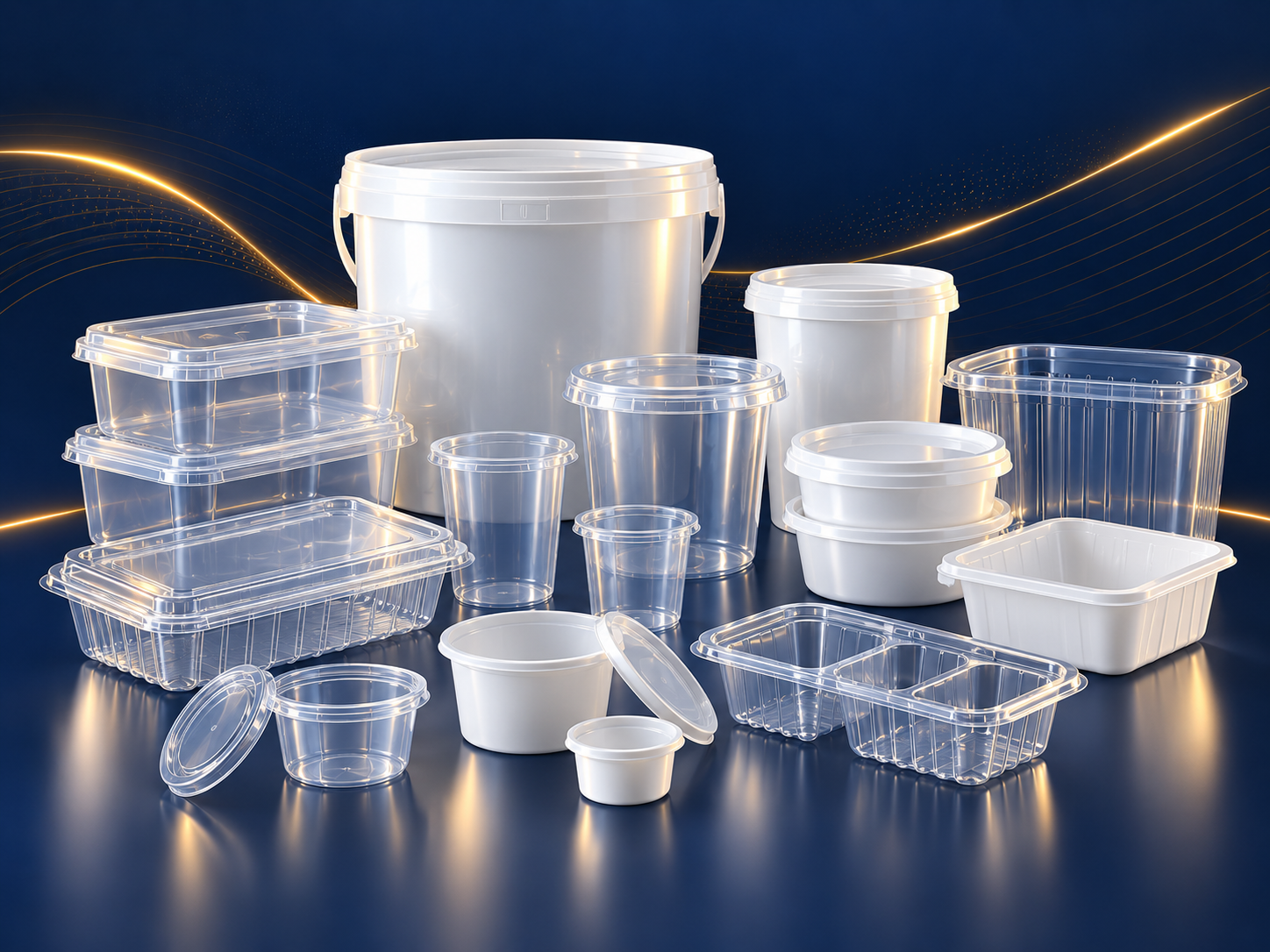
Rigid PP Products
Selected containers, pots, cups and moulded polypropylene products.

Non-Woven PP
Selected polypropylene non-woven applications.
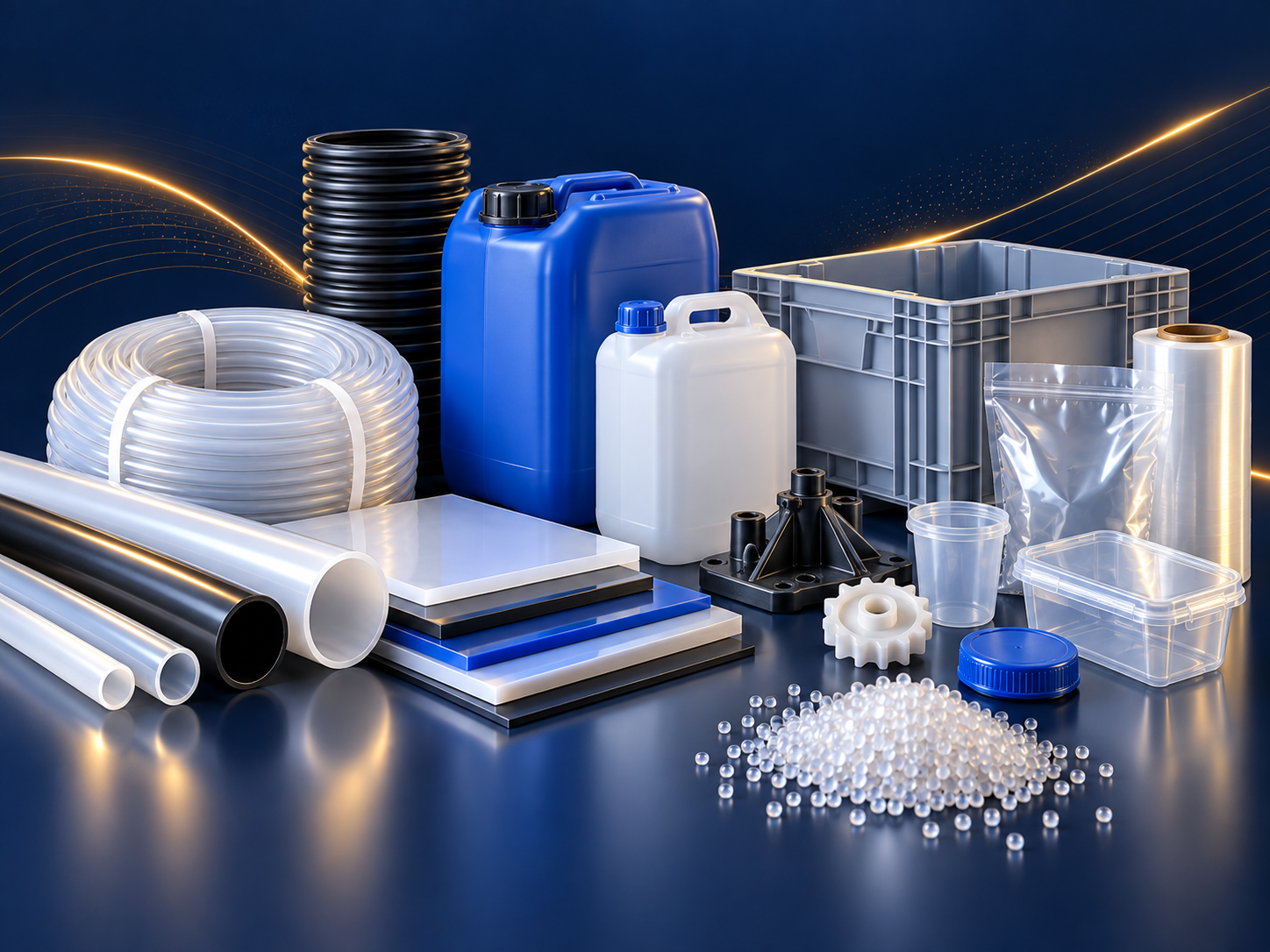
Other PE & PP Applications
Other applications can be reviewed based on polymer type, process and intended use.
Discuss a PolyPhase Application
If you manufacture PE or PP products and would like to explore whether PolyPhase may suit a specific application, share the product type, current formulation, manufacturing process and required service life with us. We can review the application and discuss whether an initial production trial may be appropriate.
For agricultural applications, crop type, film thickness, local climate and expected field life are also useful starting points.